There’s nothing quite like bringing home a Christmas tree: the smell, the sparkle, the ritual of decking it out with your favorite ornaments. But before you hang the first light, where you place your tree matters even more than how you decorate it.
Heat, airflow, sunlight, and even room temperature can impact how long your live tree stays green, full, and fragrant. And the wrong spot? It can dry your tree out in days. The good news: a little strategy goes a long way.
Here’s a homeowner-friendly guide to keeping your tree thriving all season, plus smart tips for artificial trees, too.
Why Placement Matters More Than Décor
A live Christmas tree is, at its core, a giant cut plant. Once inside, it’s fighting a losing battle against warm, dry indoor air — especially in Colorado. Anything that accelerates drying (like heat sources, direct sun, or forced air) will shorten its lifespan.
As holiday expert Jessie Brooks explained in an interview with Better Homes & Gardens, warm air pulls moisture from the needles faster than the tree can absorb water. Once drying starts, there’s no reversing it.
Good décor can make your tree pretty. Good placement helps it last.
Three Spots You Should Avoid
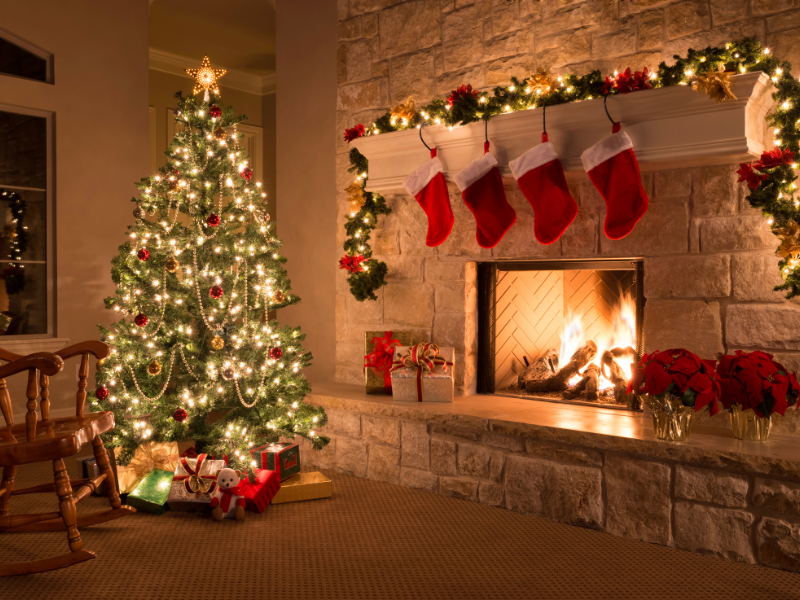
1. By the Fireplace
Yes, it looks charming. No, it will not look charming for long.
Whether gas or wood-burning, a fireplace radiates strong, drying heat that can make your tree brittle within days. Even occasional fires warm the surrounding air enough to cause needle loss. If you plan to use the fireplace at all, your tree should sit well away from it.
Better alternative: Place the tree on the opposite side of the room or at least several feet away from the hearth, where it’s visible but not exposed to direct heat.
2. Next to Radiators or Baseboard Heaters
Older homes especially use radiator or baseboard heat. Wonderful for humans, terrible for trees. These systems radiate steady, intense warmth that quickly dries out needles and branches.
If your tree always seems to droop or brown out early, check how close it is to a heater. Even being a little too close can shorten its life.
3. Over or Next to Heat Vents
Forced-air heat is one of the sneakiest culprits. The airflow may feel subtle, but your tree absorbs it constantly.
Placing your tree directly over or right next to a heat vent can cause:
- Accelerated drying and needle drop
- One-sided browning where the air hits
- Needles falling into your HVAC system, which can create stress and even fire risk over time
Simple rule of thumb: keep your tree at least three feet away from vents. If your favorite spot is near a vent, consider closing it temporarily or using a magnetic vent cover.
Bonus: Two Other Spots Worth Skipping
4. In Direct Sunlight
Colorado’s high-altitude sun can be surprisingly intense, even in winter. A south-facing window might look like the perfect backdrop, but strong, direct light can heat and dry needles quickly.
If you love your tree by the window, try to avoid direct sun hours or pull a sheer curtain to soften the light.
5. High-Traffic Corners
This one is less about tree health and more about everyone’s sanity. Busy corners near doorways, stairs, and walkways are almost guaranteed to lead to bumped branches, knocked-off ornaments, and the occasional near-tipover.
Choose a spot where the tree is visible and central to the room, but not constantly in the way.
How to Help Your Real Tree Last Longer
Once you’ve picked a smart location, a few simple habits will help your tree stay fresh and beautiful through the season.
- Lower the room temperature slightly. Fresh trees prefer cooler rooms. A temperature between about 65–70°F is ideal.
- Add a bit of humidity. Colorado winters are dry. A small humidifier near (but not right next to) the tree can help keep needles from drying out too quickly.
- Use LED lights. Incandescent string lights give off heat that can dry branches. LED lights stay cool to the touch while still delivering that warm, classic glow.
- Keep the stand filled with water. Trees drink the most in the first 24–48 hours. Make sure the base of the trunk is always submerged so it doesn’t seal with sap, which stops absorption altogether.
- Check the water daily. Especially in the first week, a quick water check is one of the easiest ways to help your tree stay full and vibrant.
If You Use an Artificial Tree, Placement Still Matters
Artificial trees don’t dry out the way real ones do, but where you place them still makes a difference for safety, longevity, and how they look over time.
- Keep them away from strong heat sources. Fireplaces, radiators, and heat vents can warp branches, fade color, or damage plastic over time. And if the tree isn’t flame-retardant, distance from open flame is especially important.
- Don’t block HVAC return vents. A tall, full artificial tree can quietly block airflow and make your furnace work harder than it should. Make sure vents can still do their job.
- Protect from long hours of direct sun. UV exposure can fade artificial needles over the years. If your tree sits in a sunny spot, rotate it occasionally so one side doesn’t age faster than the other.
- Use cooler, safer lights. Old incandescent bulbs can get hot enough to soften or melt plastic if wrapped too tightly. LED strands are a better, safer match for faux trees.
- Give pre-lit trees a little breathing room. If your tree is pre-lit, avoid pressing it flush against the wall. Tight bends in cords can wear down insulation over time.
- Avoid tight, high-traffic corners. Faux branches don’t “bounce back” the way real branches do. One good bump in a narrow hallway can permanently bend or misshape a section.
The Bottom Line
Your tree, real or artificia, deserves a spot that keeps it looking full, beautiful, and festive all season long. Keep it away from strong heat, give it a little breathing room, and choose lights that keep things merry, not melty.
With thoughtful placement and a few simple habits, your tree can shine happily from the start of the season straight through the new year.
Adapted from: “3 Spots You Should Never Put Your Christmas Tree in Your House,” Better Homes & Gardens, November 25, 2025.
Whether you’d like details on a home, are thinking about selling, or just have questions about the market, we’d love to hear from you! Start the conversation here.