
When people talk about finding the right home, the conversation often starts with the house itself.
Square footage. Layout. Price. Condition.
But over time, something else tends to matter just as much (and sometimes more) than the walls and rooms. It’s the feeling of belonging that comes from where a home is situated and how life unfolds around it.
In Colorado especially, neighborhoods carry distinct rhythms. And choosing one is often less about logic than alignment.
Belonging Is Felt in the Everyday
Belonging doesn’t usually announce itself. It shows up quietly, in routines.
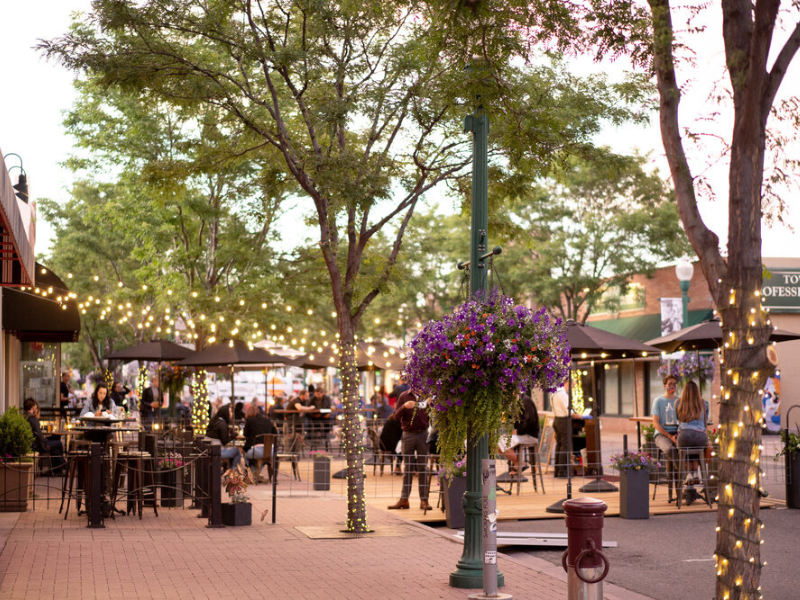
It’s the morning walk that feels natural instead of forced. The way light hits the street at a certain hour. The familiar nods from neighbors you may not know well, but recognize.
These small moments are rarely part of a listing description, yet they shape how a home feels far more consistently than finishes or features.
Why Location Is More Than Proximity
We often talk about location in terms of convenience as it relates to commute times, access, and distance.
But location also carries an emotional weight. Some places invite quiet. Others offer energy. Some feel expansive, others intimate. None are better or worse, but they are different.
Over time, people tend to feel most at ease in neighborhoods that reflect how they want to move through their days, not just how quickly they can get from one place to another.
How Priorities Shift
What creates a sense of belonging isn’t fixed.
A neighborhood that once felt perfect can begin to feel misaligned as life changes. Maybe work patterns shift, families grow or simplify, energy levels evolve.
Noticing that change doesn’t mean something went wrong. It often means awareness has caught up with reality.
Some people respond by re-rooting. Others adjust expectations and find new ways to connect where they are. Both are thoughtful responses.
The Subtle Signals We Learn to Trust
When people reflect on places they’ve loved living, the reasons are rarely dramatic.
They talk about feeling comfortable being themselves. About a pace that matched their own. About spaces, both inside and out, that supported daily life rather than competing with it.
These are quiet signals, but they’re reliable ones.
A More Grounded Way to Think About “Right Fit”
The right neighborhood isn’t always the most popular, the most talked-about, or the most impressive on paper.
Often, it’s simply the place where life feels a little easier to live.
As conversations about home continue this year, it may be worth paying attention to where that sense of belonging shows up, and what it’s quietly telling you.
We love sharing thoughtful perspectives on home, place, and everyday living. If this sparks a question or curiosity, we’d always be glad to connect and continue the conversation here.