
Dry Season: What Water Restrictions Mean for Your Home This Year
After a historically dry winter and low snowpack across Colorado, water restrictions are now shaping how homes across the Front Range will function this season. From limited watering schedules to new drought pricing, there are a few key changes already in place. Here’s a clear look at what’s happening, why it matters, and how to approach water use at home in a practical, thoughtful way this spring and summer.
As we move further into spring, water is becoming a more visible part of daily life across the Denver area.
After a historically dry winter and low snowpack in the mountains, much of the Front Range is now operating under Stage 1 drought conditions. That shift is already starting to show up in how water is being used, managed, and discussed across the region.
For homeowners, this isn’t just background context. It’s something that will shape how homes function through the warmer months.
What’s Happening Right Now
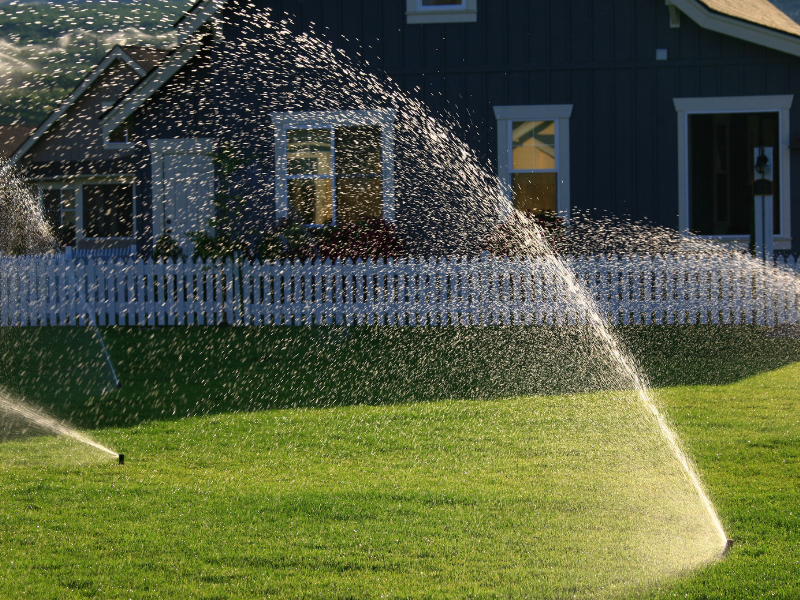
Across much of the Denver metro area, outdoor watering is becoming more limited this season. In Denver Water’s service area, lawn watering is restricted to two days per week and only during cooler hours of the day, generally before 10:00 AM and after 6:00 PM.
These measures are designed to reduce evaporation and curb demand during the months when water use tends to rise most sharply. Denver Water is also encouraging homeowners to keep automatic sprinkler systems off until mid-to-late May, or later if possible, and is asking customers to reduce overall water use by at least 20 percent.
Other communities across the metro area, including Thornton, Erie, Arvada, Littleton, and Lakewood, have also moved into conservation measures or are preparing for stricter restrictions as the season continues.
Key Restrictions and Measures This Season
| Area | What’s in Effect | What Homeowners Should Know |
|---|---|---|
| Denver Water service area | Stage 1 drought restrictions | Outdoor watering limited to two days per week; watering allowed only before 10:00 AM or after 6:00 PM. |
| Denver Water service area | Reduced irrigation guidance | Automatic sprinkler systems are recommended to stay off until mid-to-late May, or later if possible. |
| Denver Water service area | Conservation target | Customers are being asked to reduce total water use by at least 20 percent. |
| Denver Water service area | Enforcement and penalties | The first violation receives a warning, followed by a $250 fine for a second violation and a $500 fine for a third. |
| Denver Water service area | Temporary drought pricing | Beginning with May water use and reflected on June bills, added charges apply only to higher tiers of water use. Essential indoor use remains exempt. |
| Thornton, Erie, Arvada, Littleton, Lakewood | Conservation measures active or anticipated | These communities are following suit with drought-related conservation efforts, making it worth checking your local provider for the latest property-specific details. |
| Statewide rain barrel rules | Still in place | Homeowners remain limited to two rain barrels, with a combined capacity of 110 gallons total. |
Because restrictions can vary by provider, neighborhood, and property type, it’s worth checking directly with your local water district for the most current schedule and guidance.
A New Factor This Season: Drought Pricing
In addition to usage restrictions, Denver Water has introduced temporary drought pricing tied specifically to higher levels of water use.
Starting with May water use, and appearing on June bills, Tier 1 water use, which covers essential indoor use, remains exempt. Tier 2 water use will carry a drought charge of $1.10 per 1,000 gallons on top of standard 2026 rates, while Tier 3 water use will carry a drought charge of $2.20 per 1,000 gallons.
In practical terms, that means the highest levels of water use, especially outdoor irrigation, will be felt more clearly this season, while everyday indoor needs are less affected.
Why This Year Feels Different
Water restrictions aren’t new to Colorado, but this year’s conditions are being shaped by particularly low snowpack levels in key collection areas.
That snowpack is what typically replenishes reservoirs heading into spring and summer. When it’s lower than expected, the margin for heavy seasonal use becomes much tighter.
That’s why both restrictions and pricing are being introduced with more emphasis this year. The goal is to protect supply now, before the hottest part of the season arrives.
What This Means for Homeowners
In practical terms, this season will likely look a little different.
Lawns may not stay as green. Irrigation schedules may need to be more intentional. And overall water use, especially outdoors, will need to be more measured than in previous years.
That doesn’t require a full overhaul. But it does mean being more deliberate about where and how water is used.
A Simple Game Plan for the Season
For most homeowners, a few focused adjustments can go a long way:
Follow your local watering schedule. Watering within approved days and hours is the simplest way to stay compliant and reduce waste.
Wait a little longer before turning on irrigation. If your landscape can handle it, delaying sprinkler use until later in May helps reduce unnecessary early-season demand.
Check sprinklers, hoses, and drip lines. Small leaks, overspray, and broken heads can waste more water than most people realize.
Water more deeply and less often. Less frequent, more efficient watering helps encourage stronger roots and reduces runoff.
Reset expectations for lawns and landscaping. A slightly less saturated yard may simply be part of this season. That doesn’t mean a home is any less cared for.
A Shift That’s Already Happening
Across the region, these adjustments are already starting to take shape.
Homes, neighborhoods, and even commercial spaces are beginning to reflect a more measured approach to water use. And over time, that shift has a way of changing not just behavior, but expectations.
What feels different this year may begin to feel more familiar in the seasons ahead.
This season isn’t asking for perfection. But it is asking for awareness, and a willingness to adjust in ways that are both practical and sustainable over time.
We love sharing thoughtful perspectives on home, place, and everyday living. If this sparks a question or curiosity, we’d always be glad to connect and continue the conversation here.