
A little patience now saves you a full season of blooms next spring.
By Nookhaven Staff | September 22, 2026
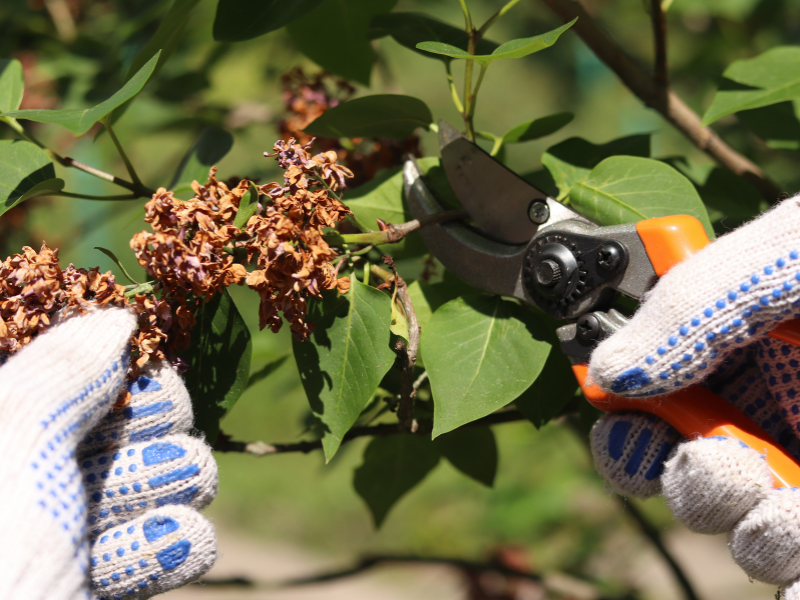
Last year, a friend of the brokerage and avid gardener spent a Saturday in early October giving her yard a proper fall cleanup. Her lilac hedge, the one that had exploded with color every May for years, looked a little wilder than normal by that point in the season, so she cut it back a bit. Tidy, responsible, exactly what fall cleanup is supposed to look like.
The following May, the hedge leafed out fine. It just never bloomed. Not one flower.
Lilacs, like several of the most-loved plants in Front Range yards, set next year’s flower buds on this year’s growth. It’s what’s called blooming on “old wood.” Prune them in fall, and you’re not tidying up. You’re cutting off the very buds that were going to become next spring’s blooms. It’s an easy mistake to make, because a lilac hedge really can look like it needs a trim right when the rest of the yard is getting its fall cleanup. But the timing matters more than the impulse.
Here’s what else to leave alone right now, and why.
Lilacs
As mentioned above, they bloom on old wood, so pruning happens right after they finish flowering in late spring or early summer, never in fall. If you’re eyeing an overgrown hedge, mark your calendar for June instead of October.
Forsythia
Same rule, same reason. These grow fast and can look unruly by fall, which tempts a lot of people into an autumn trim. Wait until just after the flowers fade in spring, and don’t remove more than a third of the branches at once.
Coneflower
This one doesn’t really need pruning at all, but if you like a tidy bed, hold off until spring. The seed heads left standing through a Denver winter feed birds when food is scarce, and they often lead to new volunteer plants coming up on their own next year.
Black-Eyed Susan
Leave the dried flower heads through winter. It’s less fall work for you, a food source for wildlife through the cold months, and a fuller patch of black-eyed Susans by the following summer.
Russian Sage
A Front Range favorite for good reason, but it’s genuinely vulnerable to winter damage if cut back too late in the season. Mulch it well and wait until late winter or early spring to prune. Cutting it in fall leaves the plant more exposed right as our coldest stretches arrive.
Milkweed
Before clearing this one out, consider what’s using it. Monarch caterpillars and other pollinators shelter in the hollow stems through fall and winter, so leaving milkweed as-is is actually the more helpful choice for the pollinators that depend on it.
Our friend kept her lilac hedge. There was no real harm done, just a quiet, blossomless spring and a lesson learned the hard way. She’s since started asking before she prunes anything, and this year, she’s leaving the shears in the garage until June. A small habit, but it’s the difference between a yard that blooms on schedule and one that’s still catching up.
Inspired by writing in Better Homes & Gardens. All writing is original, re-voiced, and locally grounded for the Nookhaven community.
We love sharing thoughtful perspectives on home, place, and everyday living. If this sparks a question or curiosity, we’d always be glad to connect and continue the conversation here.