How yesterday’s splurge became today’s expectation, and why Denver’s market got there faster than most.
By Nookhaven Homes | August 12, 2026
A Denver buyer discovered something at inspection last month that never once showed up in the listing: the primary bathroom had heated floors. It wasn’t in the photos. It wasn’t in the description. The property disclosure confirmed it afterward, buried halfway through the document in small print. No one had thought to lead with it, or even mention it at all. Maybe that’s a marketing oversight on someone’s part. But even if it is, the fact that a feature like that could go unmentioned entirely says something on its own: a decade ago, it would have been called out as a genuine selling point, not left for an inspector to find.
That’s not a fluke. It’s a sign of how quickly the bar has moved.
What Used to Impress Now Just Gets Expected
Ask an agent what “luxury” meant on a showing five years ago, and you’d hear about marble counters, soft-close cabinetry, integrated appliances, the kind of finish work that made a buyer stop in the doorway. Ask what gets that same reaction today, and the list has largely emptied out. Those features didn’t disappear. They just stopped being remarkable.
Walk-in pantries, charging drawers, and custom closet systems have gone from “nice if we can swing it” to one of the first things buyers ask about. Heated floors, once reserved for homes well north of the median, show up often enough now that plenty of sellers, like the one above, don’t think to mention them at all. Filtered and instant-hot water systems, even bidets, have moved from novelty to normal in a way that would have seemed unlikely not long ago. None of these are outlandish requests anymore. They’re closer to assumptions.
Why It Happened Faster Here
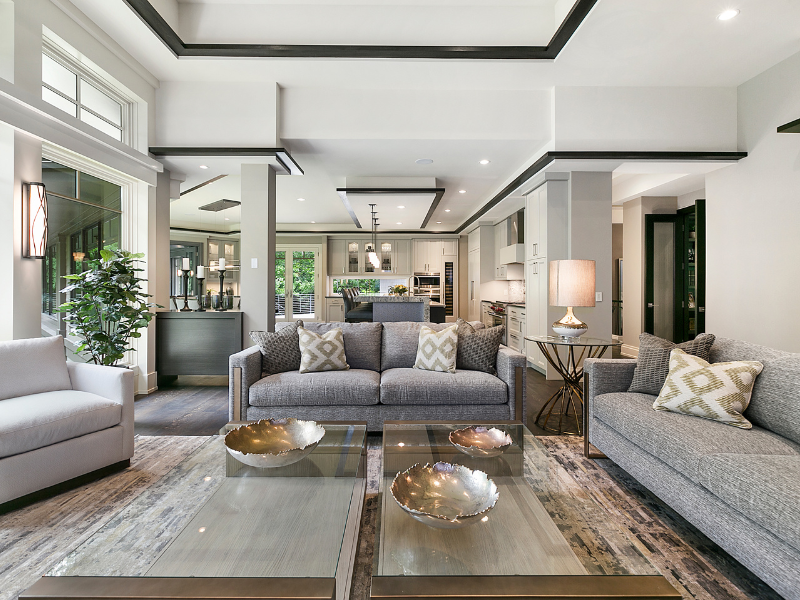
There’s a theory you’ll hear from agents who’ve spent the last few years watching Denver’s renovation and new-construction activity up close, and it goes something like this: the volume of fix-and-flip projects and the competition between builders in the $600,000–$800,000 range did more to reset buyer expectations than anything else. Finishes that used to live exclusively in the luxury tier (quartz and soft-close cabinets, upgraded tile and real hardwood, a gas fireplace in the living room, to name a few) started showing up two and three price brackets down, because that’s what it took for a flip or a new build to stand out in a competitive listing photo.
Buyers noticed. And once enough buyers walk through enough homes with those finishes at a price point that used to mean builder-grade everything, “nice to have” quietly becomes “why doesn’t this one have it.” No one decided luxury should trickle down, it’s that showing enough people what’s possible tends to move the goalposts on its own.
If You’re Buying
Don’t assume a listing’s marketing is telling you the whole story, in either direction. Some sellers oversell a mid-grade renovation with the right photo angles; others, like the one above, sit on a genuine upgrade without mentioning it at all. And don’t lean too hard on the property disclosure to fill in the gaps, either. It’s a required document, not a complete one, and too many sellers leave more out than they put in. A thorough walkthrough with your agent, and a good inspector, will tell you more than either the marketing or the paperwork ever will.
If You’re Selling
Worth knowing that the finish level that used to differentiate a listing may no longer be doing that job on its own. If your home’s main selling point is a feature that’s become common at your price tier, it’s worth an honest conversation with your agent about what’s actually setting your listing apart right now, versus what simply used to.
What’s Next
If this wave of finishes has become the new floor, it’s worth asking what’s building toward becoming the next one. A few candidates worth watching: dedicated wellness spaces (a home gym, sauna, or cold plunge setup, rather than a converted spare room), real EV charging infrastructure instead of an outlet someone ran themselves, meaningful outdoor living space built for Colorado’s usable-weather months, and air quality or filtration systems that go beyond a basic furnace filter. None of these are standard yet. Give it a few years.
Luxury, Redefined
Maybe the bigger shift isn’t in any single feature but in what “luxury” has come to mean in the first place. It used to be mostly visible and was the kind of thing a guest would notice walking in. Increasingly, it’s the opposite: the features that make ordinary days easier, quieter, less of a hassle, whether or not anyone else ever sees them. A heated floor nobody bothers to advertise is a pretty good example of exactly that.
Which might be the most Nookhaven way to put it: a home that works well for the life actually being lived in it, whether or not it makes the listing photos.
Inspired by writing in Good Housekeeping. All writing is original, re-voiced, and locally grounded for the Nookhaven community.
We love sharing thoughtful perspectives on home, place, and everyday living. If this sparks a question or curiosity, we’d always be glad to connect and continue the conversation here.