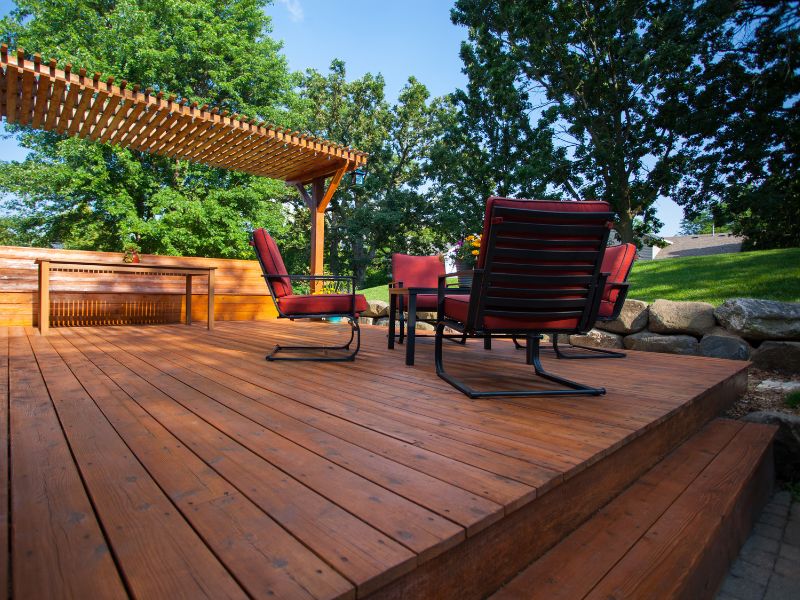
Denver gets roughly 300 days of sunshine a year, and at 5,280 feet, that sun is doing more damage than it would almost anywhere else in the country. Higher elevation means thinner atmosphere, which means more UV radiation reaching everything it touches. It affects your skin, your car’s dashboard, and yes, your deck. Add in our wild temperature swings, sudden hailstorms, and bone-dry winters, and a deck here is working harder to hold up than a deck in, say, Ohio.
Most homeowners think of deck maintenance as a “someday” task. But if your deck hasn’t been stained in a couple of years, it may already be losing the fight against our particular brand of weather. And the damage tends to hide until it’s expensive.
Why Colorado is harder on wood than most places
It’s not just the altitude. Front Range weather puts a deck through more than a steady, predictable climate would. A single July day can swing from intense, high-UV sun in the afternoon to a sudden hailstorm an hour later. Winters bring repeated freeze-thaw cycles; wood absorbs moisture, freezes, expands, thaws, contracts, and repeats, which is exactly the kind of stress that cracks and splits a surface over time. And our low humidity means wood dries out faster than in wetter climates, making it more prone to splin tering and raised grain once its protective coat wears thin.
Put together, a deck here can realistically need attention sooner than the generic “every two to three years” advice you’ll find in most home guides, especially decks that face west or south and take the brunt of the afternoon sun.
Five signs it’s time
You don’t need to guess. A few reliable tells:
The water test. Pour a little water on your deck boards. If it beads up, you’re still protected. If it soaks in and darkens the wood, the seal is gone.
Fading or graying. Intense sun breaks down pigment fast here. If your boards look washed out or patchy compared to when they were finished, that’s UV damage in progress, not just normal wear.
Peeling or flaking. More common with solid stains than semi-transparent ones — and a sign the surface needs to be fully stripped and sanded before recoating, not just touched up.
Dryness, splintering, or small cracks. Our dry air accelerates this one. Once the wood loses its natural moisture barrier, splinters and raised grain follow quickly.
Mold or mildew spots. Less common in our climate than in humid ones, but shaded decks or areas that stay wet longer after a storm can still develop it once the wood is unprotected.
What actually affects your timeline
Not every deck ages the same way, even on the same block. A few things that shift the math:
Sun exposure. A west-facing deck catching full Front Range afternoon sun will need attention more often than a shaded, north-facing one.
Wood type. Softer woods like pressure-treated pine or cedar, which are common in a lot of Denver-area builds, need more frequent staining than hardwoods like ipe, which hold up longer against sun and moisture.
Stain type. Solid stains last longest, generally three to five years, thanks to heavier pigment that blocks more UV. Semi-transparent stains run closer to two to three years, and clear sealers wear out fastest and sometimes within a year in a spot that gets full sun.
Traffic. Grill stations, furniture legs, and well-worn paths to the yard wear down protection faster than the rest of the deck, so don’t be surprised if one section needs love before the others do.
What if you have a composite deck?
If your deck is Trex or a similar composite, most of the above doesn’t apply to you the same way, which is exactly the point of composite decking. It’s engineered to resist fading, splintering, and rot without staining, so you can skip the sanding-and-restaining cycle altogether.
But “low-maintenance” isn’t the same as “no-maintenance,” especially at altitude. Colorado’s intense UV can still dull a composite deck’s color over years, even if it won ‘t crack or peel the way wood does. And composite surfaces need regular cleaning of their own. Dirt, pollen, and organic debris can build up in the surface texture and lead to mold or mildew, particularly in shaded spots or after our afternoon monsoon storms. A simple soap-and-water wash a couple of times a year keeps most of that at bay, and it’s worth checking manufacturer guidance if your deck is still under warranty, since some require specific cleaning products to keep coverage valid.
So while composite owners get to skip the staining conversation entirely, a seasonal once-over is still worth putting on the calendar. Just a much lighter one.
Why it’s worth staying ahead of
This one’s not really about looks, even though a freshly maintained deck does look good. It’s about what’s happening underneath. For a wood deck, once the protective layer fails, the boards start absorbing moisture and taking direct UV damage, which leads to warping, swelling, cracking, and eventually the kind of repair that costs a lot more than a can of stain and a Saturday afternoon. For a composite deck, staying on top of cleaning protects the finish and keeps small buildup from becoming a bigger problem later. Either way, a deck takes more abuse from Colorado’s weather than almost any other part of a home, and a little seasonal attention goes a long way toward protecting it.
Inspired by writing in Better Homes & Gardens.
We love sharing thoughtful perspectives on home, place, and everyday living. If this sparks a question or curiosity, we’d always be glad to connect and continue the conversation here.