
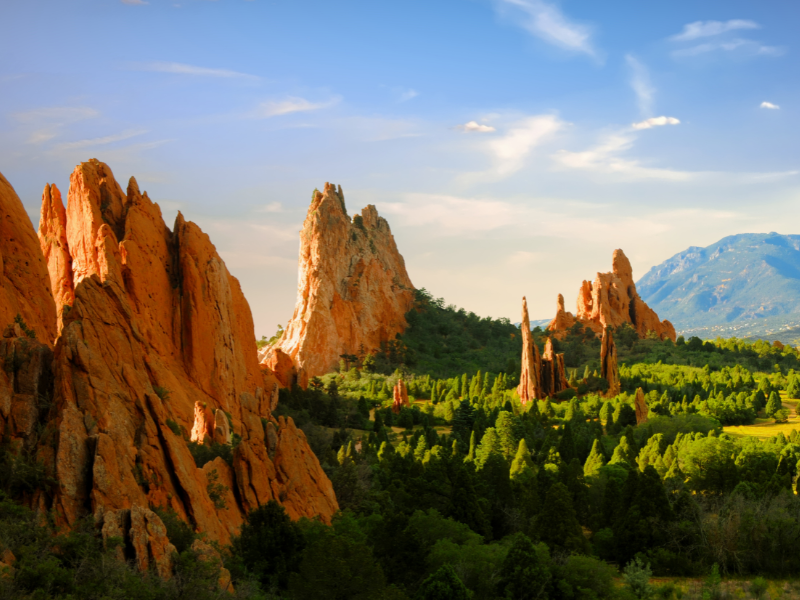
If you grew up here, you probably didn’t think much about it. The sky was just the sky. It had that particular shade of blue that showed up most mornings like it had nowhere else to be. It wasn’t until you left for college, or visited a friend somewhere gray and overcast for a week, that it clicked: oh. Not everywhere is like this.
If you came here from somewhere else, the realization arrived differently. Maybe it was your first February, when you were braced for the kind of winter that grinds and instead found yourself eating lunch outside in a sweater. Or maybe it was the moment someone mentioned, almost offhandedly, that Colorado averages around 300 days of sunshine per year. That’s more than Los Angeles, more than San Diego, more than nearly anywhere in the country. For a state most people picture buried in snow, that number has a way of reframing everything.
Either way, you know the light. And if you’ve lived here long enough, it has shaped you in ways you might not have noticed yet.
The Morning Belongs to You
The first thing Colorado sun changes is your morning.
There’s something about waking up to reliable light. Instead of the hopeful, might-clear-up light of cloudier climates, you get the settled, already-decided light of a Colorado morning. It makes it easier to get up and go. People here tend to be early risers not because they read about the benefits of it, but because the morning is genuinely too good to sleep through.
The trails are busy by 7am on a Tuesday. The coffee shop patios fill before 8. The light at that hour is soft and angular, the air still cool enough to make a jacket feel right, and there’s a particular quality to an early Colorado summer morning that feels like the day is offering you something before the rest of the world has noticed.
It becomes a ritual without you deciding to make it one. A walk before work. Coffee outside instead of in. The slow, quiet habit of starting the day in the direction of the sun. Colorado writes these rhythms for you if you let it.
What Only Works Here
Three hundred days of sun is more than a pleasant statistic. It’s the reason Colorado has an outdoor culture that doesn’t exist quite the same way anywhere else.
The ski season transitions into hiking season with barely a pause. A weekend in April can mean a powder morning at Breck and a 65-degree afternoon on a patio by the time you’re back in Denver. By June, the 14ers are opening up, drawing climbers from around the world. The window to summit safely is defined almost entirely by the sun: up before dawn, off the exposed ridge before the afternoon storms roll in. You learn to read the sky here, and the sky usually cooperates.
Mountain biking trails that would be inaccessible or dangerous under cloud cover and rain become some of the best riding in the world because the weather is simply reliable enough to plan around. Colorado cyclists can ride year-round because enough days are dry and bright to make bundling up and getting out there genuinely worth it. There’s also the outdoor concert venues, the rooftop bars, the weekend farmers markets that run from May through October. None of it works the way it does without the sun as a near-constant backdrop.
Even the pace of a Colorado summer weekend feels different. There’s less hedging. Fewer weather contingencies. You make the plan and you trust that the sky will show up. Most of the time, it does.
What It Does to a Home
The light here changes how a house feels and homes are designed to take full advantage of it.
South-facing windows become quietly valuable. A patio that catches the afternoon sun sits at the center of a home’s social life in a way that a living room sometimes doesn’t. Covered outdoor spaces are part of how a Colorado home functions, and are the difference between a patio you use and one you just walk past.
Inside, rooms that might feel dim in other climates are bright without trying. There’s a reason so many Colorado homes lean into large windows, open floor plans, and indoor-outdoor connections. The light simply makes it worth it. A sliding door to the backyard on a June evening, with the last of the sun catching the mountains in the distance, isn’t an amenity. It’s the whole point.
Colorado light also has an intensity to it, which has something to do with the altitude and the thin dry air. A little planning can be quite rewarding. UV window film protects furniture and keeps rooms cooler. Shade trees and covered pergolas make the difference between a yard you retreat from at noon and one you never want to leave. The homes that work best here work with the sun in mind.
The Long Afternoon
If the morning belongs to early risers, the late afternoon belongs to everyone.
Colorado summers have a particular rhythm to them: the sun rises early and stays late, the midday heat peaks and then softens, and the late afternoon opens into something genuinely golden. Locals learn this intuitively. They schedule outdoor dinners to start at 6 and drift toward 9. They sit on west-facing patios on purpose, facing the light as it angles lower and warmer over the mountains.
There’s a reason outdoor concerts feel different here. Red Rocks at dusk, the last light going pink behind the stage. It’s more than just a beautiful venue, it’s the Colorado afternoon doing what it does, on a scale large enough that a few thousand people all notice it at once.
The long summer evening is one of Colorado’s quieter gifts. The day doesn’t end so much as gradually release. Dinner outside. A walk after. The sky still holding color at 9pm. If you’ve lived somewhere with short summer days, the first Colorado July feels almost extravagant.
The Season Worth Staying For
Every place has its season: the one that explains why people chose it and why they stay. Colorado makes a strong case that it has two. There is the winter that draws skiers and snow lovers from around the world, and the summer that rewards everyone who stuck around for it.
Three hundred days of sun sounds like a statistic. But lived from the inside, what it means is this: that here, more than almost anywhere, the world outside your door is usually worth stepping into. The light is usually good. The sky is usually open. Most mornings feel like an invitation.
Whether you grew up watching that blue sky or stumbled into it from somewhere else, Colorado has a way of making all of it feel ordinary.
It isn’t.
Source credit: Sunshine day averages sourced from NOAA and National Weather Service climate data.
We love sharing thoughtful perspectives on home, place, and everyday living. If this sparks a question or curiosity, we’d always be glad to connect and continue the conversation here.